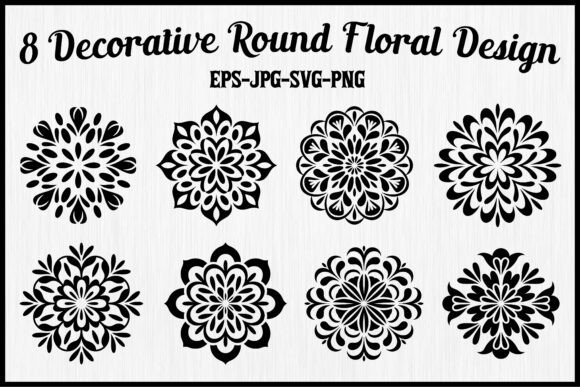
8 Decorative Round Floral Design Review
When I sit down to evaluate a new machine embroidery design, I am rarely looking for just "pretty." I am looking for viability. Can this design hold up in production? Will it translate well from screen to fabric? Does it offer enough visual weight to justify the hoop space and time investment? Today, I am putting 8 Decorative Round Floral Design through that exact scrutiny. This collection falls under the broader categories of Illustrations and Graphics, but in our world, those terms only matter if they stitch cleanly.
The premise here is intriguing: a blend of geometry and nature. The description promises an "8 Mandala Floral Pattern Collection" featuring circular motifs with intricate symmetrical petals. For a designer, symmetry is both a blessing and a curse. It creates immediate visual harmony, which customers love, but it demands precise digitizing to avoid the dreaded "spiderwebbing" or misalignment issues common in dense floral fills. Let’s break down how this embroidery file performs when we move beyond the digital preview and into the real-world application of custom apparel, boutique merchandise, and personalized gifts.
First Impressions: Geometry Meets Softness
The first thing you notice about 8 Decorative Round Floral Design is its structural integrity. Unlike loose, bohemian-style florals that can look messy if the thread tension isn’t perfect, this design relies on circular symmetry. That geometric backbone gives it a polished, professional feel right out of the gate. It feels less like a chaotic bouquet and more like a carefully curated medallion.
This makes it incredibly versatile. In my experience, clients often struggle to find designs that bridge the gap between traditional elegance and modern trendiness. This collection hits that sweet spot. The intricate symmetrical petals suggest a high level of detail, which immediately raises questions about stitch density and legibility at smaller sizes. Visually, it projects a mood of calm sophistication—perfect for brands that want to convey quality without shouting. It is not a loud, streetwear-style graphic; it is a refined accent piece. When I imagine this on a product, I see it commanding attention through subtlety rather than size.
Real-World Application: Where Does It Fit?
Let’s talk about actual use cases. I recently had a scenario where a client needed a cohesive line of handmade products for a holiday market. They wanted something that felt personal but also durable enough for frequent use. 8 Decorative Round Floral Design emerged as a strong contender for several specific items.
Tote Bags and Canvas Goods: This is perhaps the most natural home for this design. A large, round mandala centered on a canvas tote bag looks intentional and artistic. The symmetry balances the rectangular shape of the bag perfectly. Because the design features distinct circular motifs, it works beautifully as a standalone focal point. It elevates a basic $5 tote into a $25 boutique item. For an Etsy seller or craft business owner, this is a high-value transformation.
Baby Items and Nursery Decor: The soft, organic shapes of the petals soften the rigid geometry of the mandala structure. This makes it suitable for baby blankets, bibs, or nursery wall hangings. However, caution is advised here regarding scale. If stitched too small, the "intricate" details might get lost or become stiff against delicate skin. But on a larger blanket or pillow cover, the design adds a touch of whimsical elegance that parents appreciate.
Custom Apparel and Sweatshirts: Placing this design on the chest of a sweatshirt or the back of a t-shirt requires careful consideration of placement. Because it is a round motif, it pairs exceptionally well with vertical text or simple branding elements placed below it. It serves as an excellent anchor for a brand logo. For commercial embroidery projects involving branded uniforms or promotional gear, this design offers a unique alternative to standard logos, suggesting creativity and care.
Embroidered Patches and Caps: The circular nature of the design makes it ideal for patch work. Whether applied to denim jackets, backpacks, or embroidered patches for hats, the round shape fits naturally within standard patch dimensions. On caps, however, curvature becomes a challenge, which I will address shortly.
Technical Considerations and Potential Pitfalls
No design is flawless, and 8 Decorative Round Floral Design has specific areas where a designer must exercise judgment. The description mentions "intricate" details, which is code for potential trouble spots in digitizing.
- Small Hoop Sizes: If you attempt to shrink this design down to fit a 4x4 inch hoop or smaller, you risk losing definition. The fine lines between the symmetrical petals may merge together, creating a muddy appearance. I strongly advise testing this on scrap fabric before committing to a final product. If the details are too fine, consider using a larger hoop size or simplifying the design digitally.
- Fabric Texture and Stability: This design likely utilizes a mix of satin stitch for outlines and fill stitch for the petals. Dense fill stitches require a stable base. On stretchy fabrics like jersey knit (common in t-shirts), you must use a heavy-duty stabilizer to prevent puckering. On textured fabrics like waffle weave or bouclé, the needle may skip, ruining the precision of the geometry.
- Dark vs. Light Fabric: The visual impact of this design will shift dramatically based on background color. On light fabrics, the design will pop with clarity. On dark fabrics, you will need to choose thread colors carefully to ensure contrast. A black mandala on a navy shirt might disappear, whereas a white or metallic gold version could look stunning. Always test your thread colors against your actual garment stock.
- Curved Surfaces: As mentioned, applying this to a cap is tricky. The flat circle of the design may distort when stitched onto a curved brim or crown. It is better suited for flat surfaces like aprons, kitchen towels, or pillow covers where the fabric remains taut and even.
Stitch Density and Material Choices
One of the critical factors in evaluating any digital embroidery file is stitch density. While exact stitch counts are not provided in the product description, the term "intricate" suggests a higher-than-average density. High density adds durability and a luxurious feel to the finished product, but it also adds weight and stiffness.
If you are producing handmade products that will be washed frequently, such as tea towels or aprons, this design should hold up well due to its solid fill areas. However, if you are working with thin fabrics or garments that need to remain soft and drapeable, the stiffness caused by dense stitching might be undesirable. In such cases, consider reducing the stitch density in your digitizing software or opting for a lighter stabilizer method.
Another practical note: inspect the small details closely. In many mandala designs, the center or the outer edges contain tiny decorative elements. These are often the first things to fray or wear down over time. If this design is intended for long-term commercial use, verify whether those tiny details are robust enough to survive industrial laundering or regular home washing.
Brand Consistency and Customer Appeal
From a marketing perspective, 8 Decorative Round Floral Design is a powerful asset. Its symmetry conveys balance and order, qualities that subconsciously build trust with buyers. When a customer sees a neatly executed mandala on a product, they perceive higher craftsmanship. This is particularly valuable for small shop owners competing in crowded markets like Etsy or craft fairs.
The design’s versatility allows for strong brand consistency. You can use variations of this mandala across different product lines—totes, shirts, and packaging stickers—and maintain a cohesive visual identity. The "geometry and nature" theme is timeless, meaning your inventory won’t look dated next season. This longevity is crucial for creative entrepreneurs who want to minimize redesign costs and maximize the lifespan of their design assets.
Furthermore, the design’s aesthetic lends itself well to giftability. A personalized gift featuring a sophisticated floral mandala feels more thoughtful and premium than a generic graphic. Whether it’s a wedding gift, a holiday present, or a birthday surprise, the finished product carries an emotional weight that drives positive reviews and repeat business.
Final Verdict and Best Practices
Overall, 8 Decorative Round Floral Design is a strong candidate for designers seeking a blend of modern geometry and organic beauty. It excels in applications where stability and flat surfaces are guaranteed, such as tote bags, aprons, and home decor. It brings a sense of professionalism and artistry that can elevate a simple product into a desirable commodity.
However, success depends on preparation. Before mass-producing items with this design, follow these essential steps:
- Test on Scrap: Always run a sample on the actual fabric you plan to use. Check for puckering, thread breaks, and detail loss.
- Check Licensing: Confirm whether the purchase includes commercial rights for selling finished goods. This varies widely among design assets providers.
- Optimize for Scale: Ensure the design is large enough to retain its intricate details. Do not force it into hoops that are too small.
- Use Proper Stabilizer: Match your stabilizer to your fabric weight to prevent distortion.
- Review Stitch Types: Analyze the balance of running stitch, satin stitch, and fill stitch to ensure efficient stitching times and clean finishes.
If you handle these technical aspects with care, 8 Decorative Round Floral Design will serve you well. It is not just a pretty picture; it is a functional, marketable tool for your creative business. By understanding its strengths and limitations, you can confidently integrate it into your workflow, knowing it will meet the high standards your customers expect.